In today’s economy, many individuals and businesses are opting for renting equipment rather than purchasing. This article explores the numerous benefits of utilizing local equipment rentals, providing valuable insights into cost savings, convenience, and sustainability.
What are the Cost Savings Associated with Equipment Rentals?
Understanding Financial Advantages
Opting for local equipment rentals can dramatically cut down on several financial burdens faced by both businesses and individuals. First and foremost, renting eliminates the hefty upfront costs associated with purchasing new equipment.
Buyers usually face depreciation as a critical factor influencing long-term value, whereas renters bypass this issue completely. Additionally, maintenance fees – often unpredictable and significant – are generally included in rental agreements, offering further savings.
Another significant financial advantage is the elimination of storage costs, which can be exorbitant depending on the type and size of equipment. Renting means the equipment is quickly returned after use, avoiding the hassle and expense of storage facilities. By using local rental services, transportation costs are minimized, thus offering more savings. Furthermore, it allows businesses to allocate their budgets to critical areas without being tied down by equipment ownership costs. Overall, the economic advantages of renting are vast, helping individuals and enterprises alike.
It’s important to recognize that financial planning in business or individual scenarios revolves heavily around flexibility. With equipment rentals, capital that would have been engaged in purchasing can be redirected to other lucrative projects or investments. This financial flexibility is crucial for small businesses that must prioritize financial prudence. Moreover, this approach aids in stabilizing cash flow, especially for startups and enterprises that might experience fluctuations in revenue. Thus, equipment rental is not just a cost-saving measure but a strategic financial decision that promotes sustainable business practices.
How Does Equipment Rental Enhance Project Flexibility?
The Benefits of Adaptability
One of the key benefits of equipment rental lies in its ability to enhance project flexibility. When equipment needs are temporary or occasional, renting offers the unique advantage of on-demand access, tailored exactly to the life span and requirement of a project. This eliminates the constraint of being limited to the tools one owns, especially when specialized or additional equipment is needed for a brief period.
Many industries experience seasonality or peak periods where the need for specific equipment spikes. Local rental services provide a rapid response to these demands, enhancing productivity and ensuring projects stay on schedule. This adaptability is critical in ensuring deadlines are met without the expense and waste tied to purchasing rarely used machinery. Renting allows quick pivots in project strategies – an essential factor when external conditions or project demands shift suddenly.
Furthermore, equipment rental fosters innovation by enabling access to newer technology or state-of-the-art equipment that businesses might otherwise not afford. This capability ensures projects can be executed with maximum efficiency and effectiveness, utilizing the best tools available without significant capital outlay. Moreover, by freeing businesses from worrying about equipment obsolescence, rentals encourage experimentation and growth. Overall, the flexibility offered through rentals turns potential project constraints into opportunities for optimization and success.
Are Equipment Rentals Environmentally Friendly?
Assessing the Environmental Impact
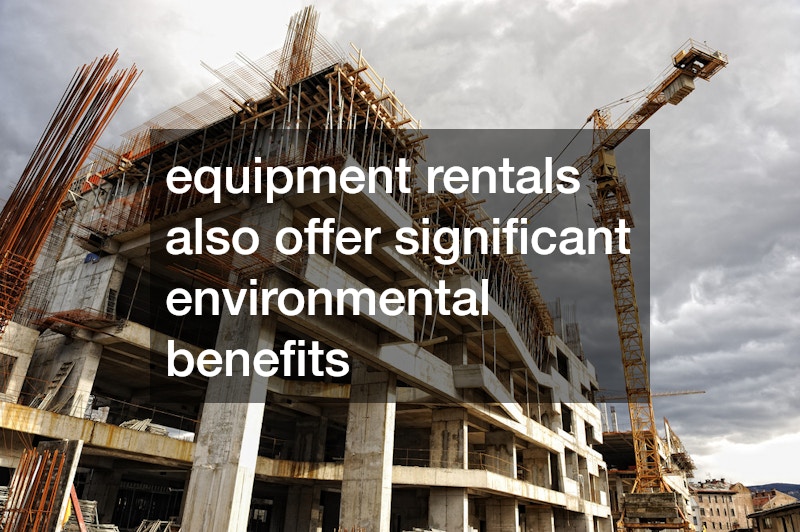
Beyond cost and flexibility, equipment rentals also offer significant environmental benefits. Sharing equipment among different users reduces the total number of machines required, thus diminishing resource extraction and manufacturing impacts – a practice aligning with green initiatives. Fewer units in production and circulation means a reduction in both the energy consumed during production and the subsequent emissions throughout their lifecycle.
Moreover, equipment rentals encourage a sustainable use pattern. With products in continuous use as they are rented out, lifespans are maximized while preventing idling machinery from increasing carbon footprints needlessly. Additionally, rental companies often maintain and upgrade their inventories efficiently to meet regulatory standards and reduce emissions, further supporting environmental goals. By relying on rental companies, the equipment experiences regular checks, reducing wastage and promoting longevity.
The act of renting instead of purchasing also inspires a broader cultural shift towards circular economy practices. It encourages a society where sharing and optimizing resources outweighs personal ownership. This shift reduces waste, cuts down on redundant purchases, and promotes an efficient, cyclical use of resources. Ultimately, using rental services contributes positively to recycling practices and the reduction of industrial waste, aligning with both community values and global sustainability objectives.
Utilizing local equipment rentals can provide numerous benefits, from financial savings and flexibility to positive environmental impacts. By understanding these advantages, both individuals and businesses can make informed decisions that contribute to project success and sustainability. In a world increasingly moving towards sustainable practices, equipment rental stands out as a strategic choice aligning economic, operational, and environmental priorities.